
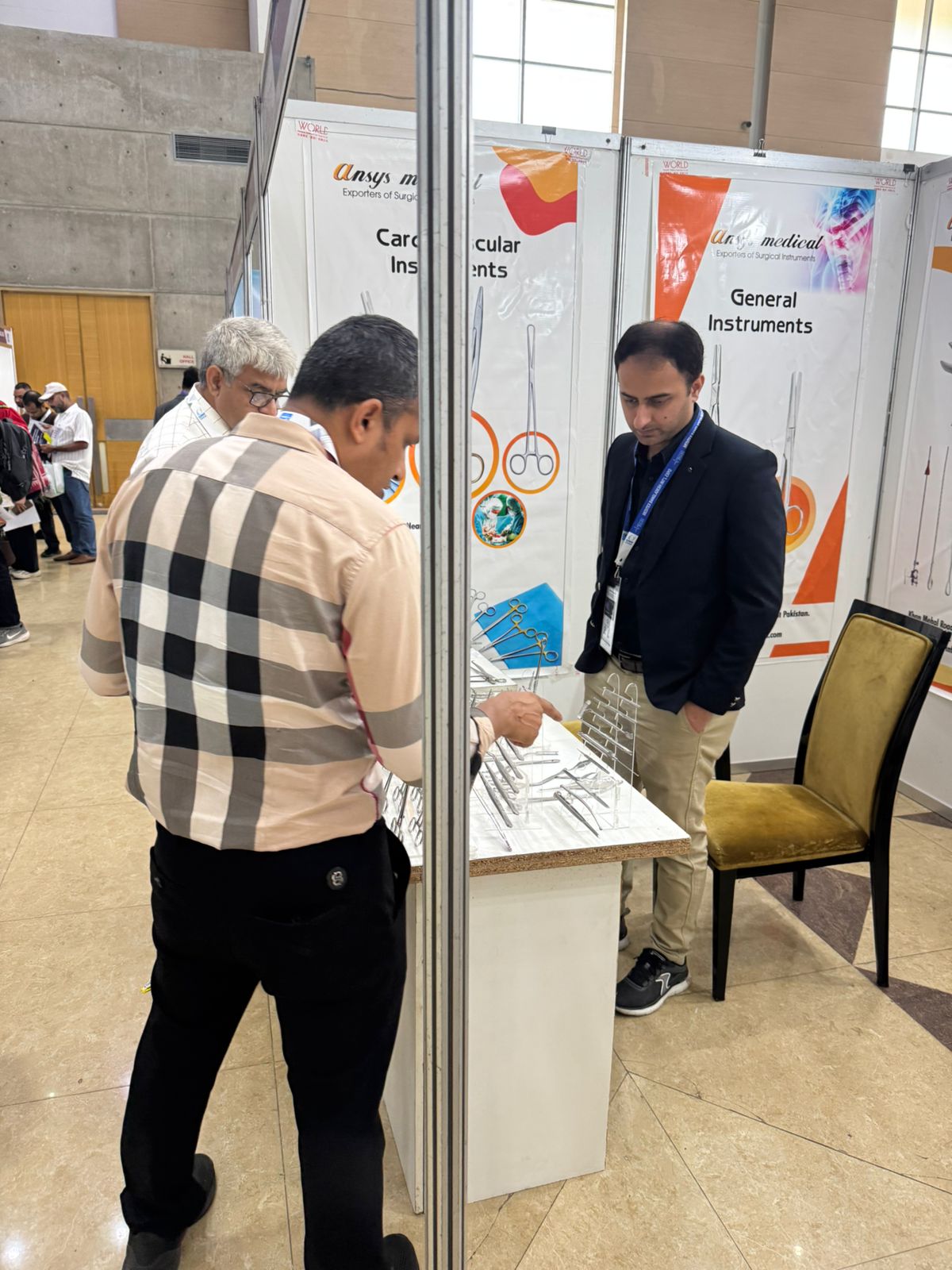
Selecting the right surgical and dental instruments is one of the most consequential decisions any healthcare provider can make. These tools are not just equipment — they are a direct extension of the practitioner’s skill, precision, and responsibility toward patient care. Whether the setting is a complex surgical theatre or a routine dental check-up, the quality of instruments shapes outcomes, efficiency, and safety at every step.
This guide is written specifically for healthcare professionals, clinic administrators, and procurement managers preparing for the Dhaka International Diagnostic Medical Equipment Expo 2026 (DIDMEE 2026), scheduled for April 23–25, 2026. At an event of this scale, knowing what to look for — and who to trust — makes the difference between a well-equipped facility and a costly mistake.
What is DIDMEE 2026?
The Dhaka International Diagnostic Medical Equipment Expo (DIDMEE 2026) is one of South Asia’s most significant healthcare trade events, dedicated to diagnostic technology, medical consumables, infection control solutions, and surgical equipment. Taking place at the Bangladesh China Friendship Exhibition Centre (Big Wave), Purbachal, Dhaka, it brings together global manufacturers, distributors, healthcare administrators, and clinical practitioners under one roof.
For three days — from 23 to 25 April 2026, 10:30 AM to 7:00 PM daily — attendees can explore thousands of products, compare suppliers side by side, attend clinical demonstrations, and build procurement partnerships that will define their facility’s capabilities for years to come.
Ansys Medical is a precision surgical and dental instrument manufacturer supplying hospitals, clinics, and healthcare facilities across South and Southeast Asia. With a comprehensive range spanning general surgery, dentistry, ophthalmology, orthopedics, gynecology, and neurosurgery, Ansys Medical offers a single-source procurement solution built on international quality standards, rigorous testing, and trusted long-term partnerships with healthcare providers.
Understanding the Importance of Instrument Quality
At the core of every reliable medical procedure lies a reliable instrument. High-quality surgical and dental instruments are engineered to deliver consistent, repeatable performance under the most demanding clinical conditions — whether that means a six-hour orthopaedic procedure or hundreds of extractions in a busy dental clinic.
An instrument that bends, chips, or loses its calibration mid-procedure does not just disrupt the workflow — it introduces genuine patient risk. Poor-quality tools can cause tissue trauma, extend procedure times, and lead to post-operative complications that are entirely avoidable. Conversely, precision-crafted instruments give practitioners confidence: they respond predictably, feel balanced in hand, and maintain their edge and accuracy over years of clinical use.
“The instrument is where clinical intention meets clinical reality. A practitioner’s skill can only go as far as the tool in their hand will allow.”
Ansys Medical has built its entire reputation on this principle. Every product in our range undergoes strict quality assurance processes aligned with international standards — because we understand that what leaves our facility will be used on real patients, in real procedures, under real pressure.
Material Matters: The Backbone of Durability
The single most important factor in an instrument’s longevity and performance is the material from which it is made. Premium-grade surgical stainless steel — specifically 316L grade — is the gold standard in instrument manufacturing. It offers exceptional resistance to corrosion from saline, body fluids, and chemical sterilants; it maintains structural strength under mechanical stress; and it can be precisely machined to tolerances that cheaper alloys simply cannot achieve.
By contrast, instruments manufactured from lower-grade metals may appear visually identical in a product catalogue but fail in practice. Common failure modes include:
- Surface pitting and corrosion after repeated autoclaving, creating sites for bacterial biofilm
- Blade dulling after only a fraction of the expected use cycles
- Joint loosening in scissors, needle holders, and clamps, reducing precision grip
- Handle cracking or deformation under normal clinical torque loads
- Colour change or surface degradation that makes sterilization verification unreliable
At Ansys Medical, every instrument in our catalogue is manufactured from certified surgical-grade stainless steel, with full material traceability from raw stock to finished product.
Always ask suppliers at DIDMEE 2026 for material certification documents. A legitimate manufacturer will readily provide the steel grade specification. Visit us at Booth B-14 — we bring full documentation to every expo.
Ergonomics: Enhancing Precision and Comfort
Clinical ergonomics is often undervalued in instrument procurement — until a surgeon develops repetitive strain injury, or a dentist loses fine motor precision due to hand fatigue. The design of an instrument’s handle, weight distribution, and tip geometry has a profound effect on both practitioner wellbeing and procedural accuracy.
Handle Design and Grip
An ergonomically designed handle distributes grip force evenly across the palm and fingers, reducing the effort required to maintain control during precise movements. Textured finger rings, thumb rest grooves, and optimally weighted handles all contribute to a more stable grip — particularly critical during microsurgical or fine dental work where even a 0.5mm deviation matters.
Balance and Weight Distribution
A well-balanced instrument feels like a natural extension of the hand. When an instrument is front-heavy or unevenly weighted, practitioners unconsciously compensate by gripping harder — accelerating fatigue over the course of a long procedure. Ansys Medical instruments are designed with balance as a primary engineering objective, not an afterthought.
Tip Geometry and Functional Precision
The working end of an instrument must be precisely shaped to the clinical task it performs. A needle holder whose jaws don’t align perfectly wastes suture material and slows closure. A dental elevator with the wrong angle increases extraction force and patient discomfort.
Textured, anatomically proportioned handles that reduce grip effort and improve tactile feedback during delicate procedures.
Precision-weighted instruments that sit naturally in the hand, reducing compensatory grip strength and fatigue during long procedures.
Working ends machined to clinical-task specifications, validated against real-world procedural workflows — not just dimensional targets.
Smooth, correctly tensioned joints in scissors and clamps that open and close with consistent resistance across thousands of use cycles.
Sterilization and Safety Standards
Every instrument that enters a sterile field must be capable of withstanding the full sterilization process — not once, but hundreds of times across its clinical lifespan. The standard method is steam autoclaving at 134°C under pressure. Instruments that cannot reliably withstand this present a serious infection control risk — surface degradation creates microscopic pits where pathogens can shelter, surviving even chemical disinfection.
What to Verify Before Purchasing
- Confirmed compatibility with steam autoclave sterilization at 134°C / 273°F
- Surface finish rated to resist pitting under repeated chemical exposure (glutaraldehyde, enzymatic cleaners)
- Joint and hinge mechanisms that maintain smooth function after autoclaving
- No dissimilar metal joints that can create galvanic corrosion points during sterilization
- Marking or etching that does not compromise surface integrity
- CE marking or equivalent compliance for sterilization compatibility
Ansys Medical instruments are tested to confirm performance across extended sterilization cycles — because in a real clinical environment, your instruments will be autoclaved continuously for years.
A Comprehensive Range for Every Specialty
One of the most significant inefficiencies in healthcare procurement is fragmentation — sourcing instruments from multiple suppliers for different departments, each with different lead times, quality standards, and service contacts. Ansys Medical offers a genuine single-source solution covering every major clinical specialty.
This breadth means a hospital system can standardize procurement across departments — same supplier, same quality standards, same documentation, same service relationship. For procurement managers, this translates directly into time savings, reduced administrative overhead, and cleaner audit trails.
Customization for Unique Clinical Requirements
Standard catalogues are built for common procedures — but healthcare is not always common. Specialist surgeons, teaching hospitals, and clinics pioneering new approaches frequently encounter situations where off-the-shelf instruments simply do not meet the requirement. Ansys Medical offers a structured custom instrument development process, including:
- Custom tip geometries for unique anatomical access requirements or novel surgical approaches
- Modified handle lengths, diameters, and profiles for specific practitioner hand sizes or procedure angles
- Specialty surface finishes for enhanced visibility under specific lighting (e.g., non-reflective matte for endoscopic procedures)
- Custom jaw and ratchet configurations for needle holders and clamps used in specialized suturing techniques
- Instrument set curation — assembling bespoke tray sets for specific procedure types, reducing setup time and picking errors
If you are attending DIDMEE 2026 with a specific clinical challenge in mind, bring your requirements to Booth B-14. Our technical team will be present throughout all three days to discuss custom development feasibility, timelines, and cost structures in detail.
Reliability and Long-Term Value
The true cost of a surgical instrument is almost never its purchase price. Healthcare administrators need to think in terms of total cost of ownership — a figure that includes replacement frequency, downtime during instrument failure, sterilization consumables, and the harder-to-quantify cost of procedural inconsistency caused by degraded tools.
Lower upfront cost. Higher replacement frequency (every 1–2 years). Inconsistent performance as instruments degrade. Higher infection risk from surface deterioration. Greater practitioner frustration and compensation fatigue.
Higher upfront cost. 8–12+ year operational lifespan with proper care. Consistent clinical performance throughout. Lower per-procedure cost over the instrument’s life. Predictable procurement cycles and supplier relationships.
Ansys Medical instruments are designed and manufactured with longevity as a core specification. When you buy from Ansys Medical, you are not purchasing a disposable asset — you are investing in a clinical tool that will serve your facility reliably for years.
DIDMEE 2026 and the Future of Healthcare in Bangladesh
Bangladesh’s healthcare sector is undergoing one of the most significant periods of transformation in its history. With a population exceeding 170 million, rising rates of chronic disease, and a growing middle class with higher healthcare expectations, the demand for high-quality medical equipment has never been stronger.
For healthcare professionals attending this year’s expo, DIDMEE 2026 is an opportunity to evaluate suppliers face to face, compare product quality directly, and build procurement partnerships that will shape your facility’s capabilities for the next decade.
- Evaluate instrument quality firsthand — handle products, ask technical questions, and compare manufacturers side by side
- Discover new product categories and technologies relevant to your specialty
- Build direct relationships with manufacturers, bypassing intermediaries for better pricing and service
- Attend clinical demonstrations and supplier presentations to deepen product knowledge
- Benchmark your facility’s current equipment against international standards and identify upgrade priorities
- Negotiate procurement agreements directly at the event, with face-to-face accountability
A Procurement Checklist Before You Attend DIDMEE 2026
To make the most of your time at the expo, prepare in advance with these key questions for any instrument supplier you speak with:
- What steel grade is used? Can you provide material certification documentation?
- How many sterilization cycles has this instrument been validated for?
- What quality standard does your manufacturing process comply with (ISO 13485, CE, etc.)?
- What is the warranty period and what does it cover?
- Do you offer custom instrument development, and what is the minimum order quantity?
- Can you provide references from hospitals or clinics currently using your instruments?
- What is your lead time for orders placed in Bangladesh, and do you have regional stock?
- Do you offer instrument repair or refurbishment services, or only replacement?
We will have live instrument demonstrations, full material and compliance documentation, and our technical team available for detailed clinical discussions across all three days of DIDMEE 2026. Come with your requirements — and your questions.
Conclusion
Choosing the right surgical and dental instruments is not a transaction — it is a clinical decision that will affect every procedure performed in your facility for years to come. The criteria are clear: material quality, ergonomic design, sterilization durability, comprehensive range, and a supplier relationship built on transparency and accountability.
Ansys Medical has built its business on meeting every one of these criteria, and we look forward to demonstrating that in person at DIDMEE 2026. If you are serious about upgrading your instrument procurement — or simply want to see what genuinely high-quality surgical and dental instruments look and feel like — we would be honoured to welcome you to our booth.
Need instruments for your hospital or clinic?
Tell us what you need — we’ll reply with a tailored quote.
Keep reading
Why Precision & Quality Define Every Outcome in Surgical Orthopaedics | Orthopedics in Paboi in Palembang
May 25, 2026 • 7 min read
Surgical Instrument Supplier Bangladesh Meditex 2026 — Proven Quality, Avoid Costly Mistakes | Ansys Medical
Apr 23, 2026 • 11 min read
Surgical Instruments Supplier in Saudi Arabia
Oct 27, 2025 • 7 min read