
Orthopaedic Implants at PABOI 2026 Palembang — Why Precision & Quality Define Every Surgical Outcome
Orthopaedic implants at PABOI 2026 Palembang were at the centre of discussion as Indonesia’s leading orthopaedic community gathered for the 74th Continuing Orthopaedic Education (COE). From fracture fixation to joint reconstruction, the event reinforced one fundamental truth: precision and quality in surgical implants are not optional — they are the foundation of every successful patient outcome.
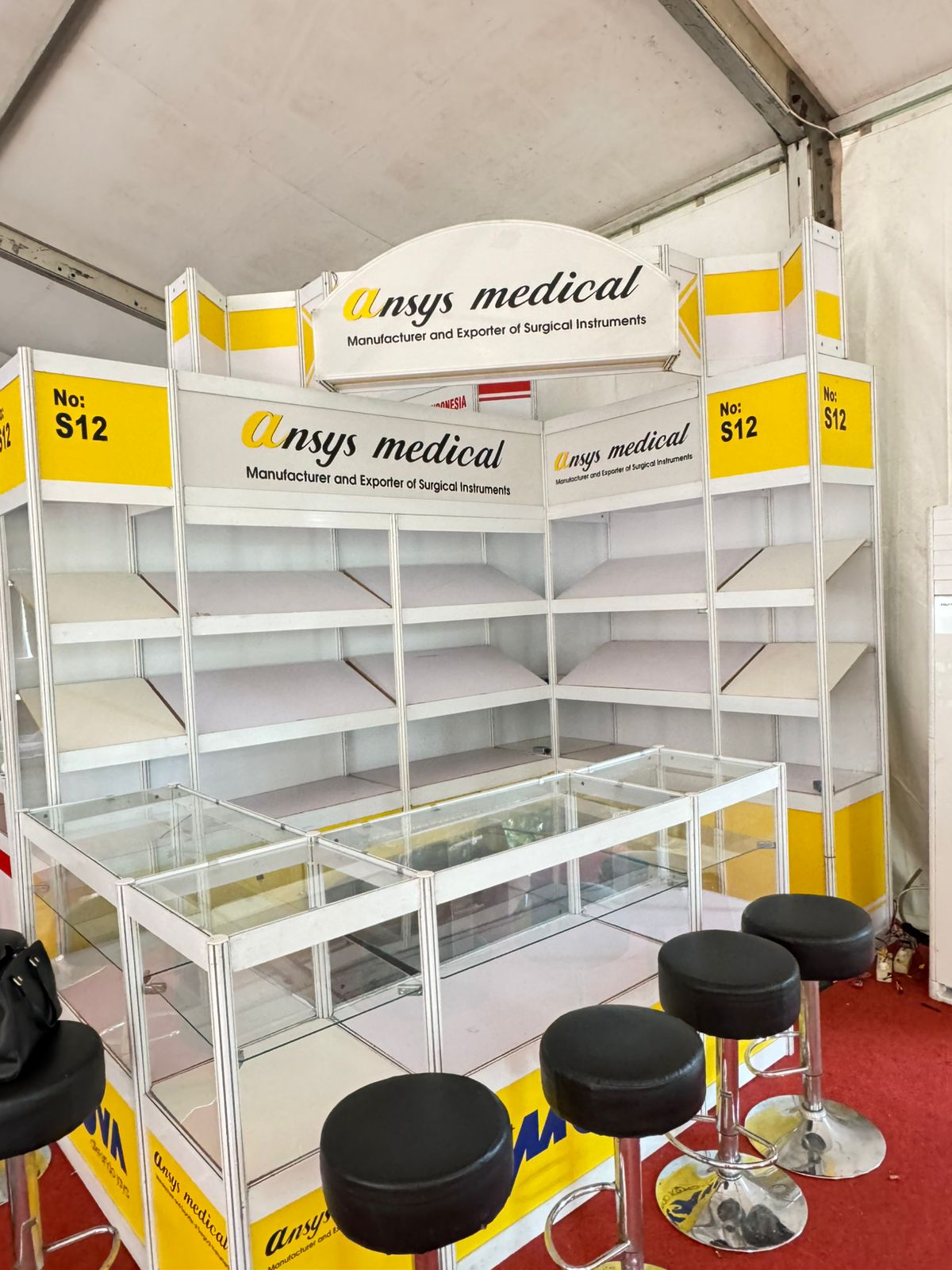
Ansys Medical at the PABOI COE 2026 medical exhibition, Palembang, Indonesia
- Why Patients Demand the Highest Standards in Orthopaedic Implants
- The Growing Need for Reliable Orthopaedic Implants
- What Precision Means for Orthopaedic Implants in Modern Surgery
- Our Full Orthopaedic Implant Range
- Customisation of Orthopaedic Implants for Unique Surgical Needs
- PABOI COE 2026 Palembang — Advancing the Field
When a patient enters the operating room, trust becomes everything. Whether it is a fracture repair, trauma surgery, or joint replacement — the quality of orthopaedic implants and instruments in the surgeon’s hands determines the outcome. This article explores why precision is non-negotiable, and what PABOI COE 2026 Palembang revealed about the future of surgical orthopaedic care in Indonesia.
Why Patients Demand the Highest Standards in Orthopaedic Implants
No patient undergoing orthopaedic surgery would knowingly accept low-quality orthopaedic implants or poorly manufactured instruments. Yet procurement decisions made without adequate scrutiny of quality can lead to exactly that situation — with consequences that extend far beyond the operating theatre.
Even a minor deficiency in orthopaedic implant alignment or material integrity can trigger a cascade of serious clinical problems:
- Surgical complications and significantly extended operative times
- Implant instability and delayed or incomplete bone healing
- Orthopaedic implant failure requiring costly revision surgery
- Long-term impact on patient mobility and quality of life
- Increased financial burden on healthcare facilities and patients
“In orthopaedic surgery, precision is not just a technical requirement — it directly affects a patient’s recovery, mobility, comfort, and long-term health. The quality of an orthopaedic implant is a clinical responsibility, not a marketing feature.”
This is why hospitals, orthopaedic surgeons, trauma specialists, and procurement teams across Indonesia continuously seek trusted orthopaedic implants that offer both documented reliability and surgical precision — not just a competitive price point.
The Growing Need for Reliable Orthopaedic Implants in Indonesia
Demand for orthopaedic implants continues to rise across South and Southeast Asia, driven by a combination of demographic and clinical factors — a trend directly addressed at PABOI 2026 Palembang.
Rising incidence of fractures and complex bone injuries requiring immediate orthopaedic implant fixation and stable surgical support.
Active populations and industrial growth creating consistent demand for orthopaedic implants across all age groups.
Age-related conditions such as osteoporosis and degenerative joint disease increasing orthopaedic implant caseloads year on year.
Conditions requiring structural bone support via orthopaedic implants to restore patient function and independence.
In each of these scenarios, the success of surgical intervention depends entirely on the quality of the orthopaedic implant and the instruments used to place it. A reliable orthopaedic implant is not merely a device — it is the foundation of a patient’s recovery.
What Precision Means for Orthopaedic Implants in Modern Surgery
High-quality orthopaedic implants today are engineered around measurable performance standards that reflect real clinical demands. Precision, in this context, is not a marketing claim — it is the difference between a successful procedure and a revision.
Poor fixation accuracy. Material failure under physiological load. Elevated revision surgery rates. Infection risk from surface degradation. Delayed patient recovery and rehabilitation.
Accurate fixation and stable bone alignment. Structural strength for long-term durability. Certified sterilization resistance. Consistent, dependable surgical performance every time.
Modern orthopaedic surgery demands implants and instruments that are reliably engineered, adaptable to different surgical requirements, and supported by documentation that demonstrates consistent manufacturing quality — not just visual inspection at the point of delivery.
Our Full Orthopaedic Implant Range for Trauma & Reconstruction
Comprehensive orthopaedic care requires a full ecosystem of solutions. Our orthopaedic implant range is designed to cover the full spectrum of trauma and surgical applications — the same range showcased at PABOI 2026 Palembang.
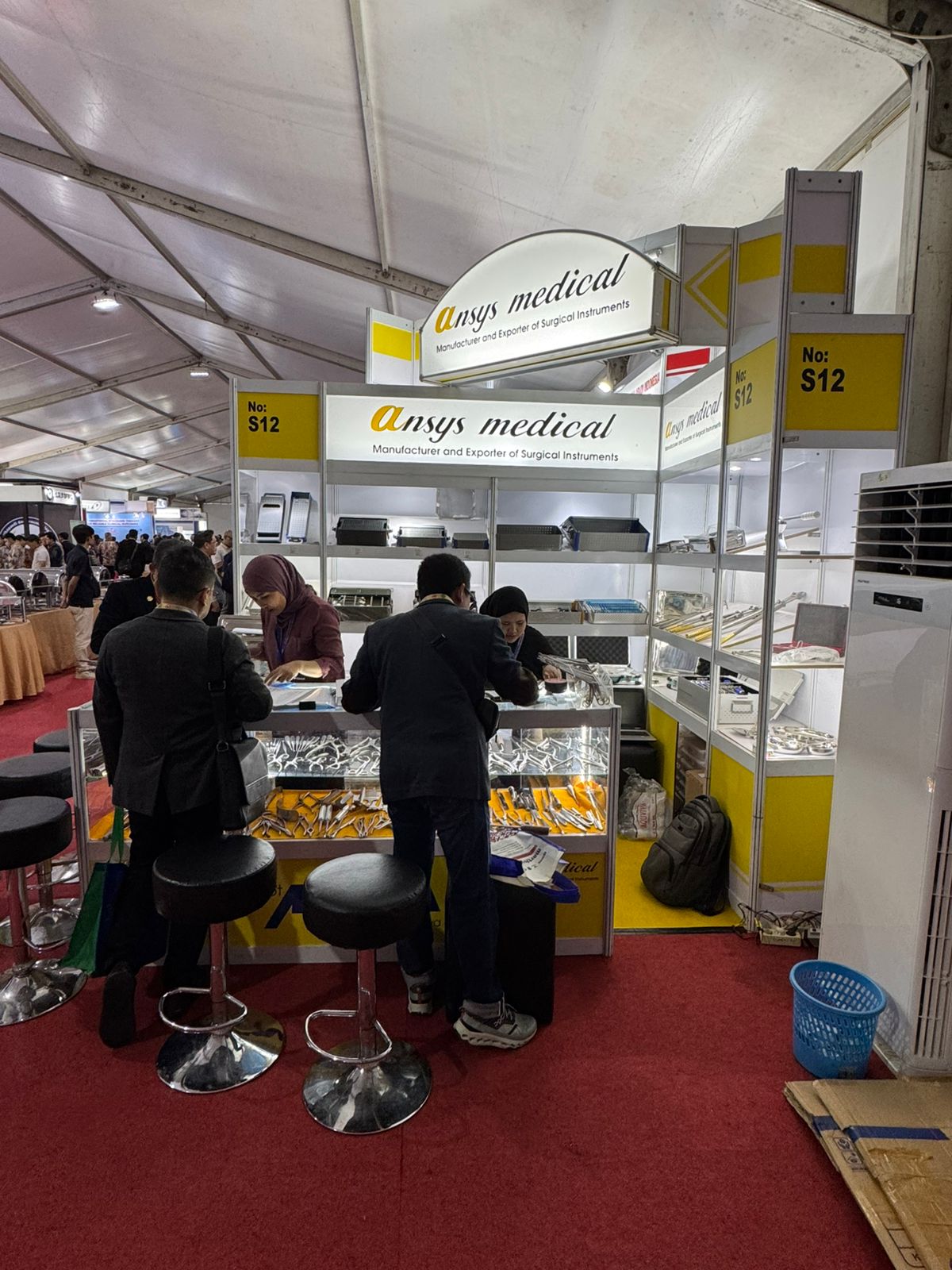
Ansys Medical’s full orthopaedic implant range on display at PABOI COE 2026, Palembang, Indonesia
Customisation of Orthopaedic Implants for Unique Surgical Needs
Every patient presents a unique anatomical picture. Standard orthopaedic implant catalogues cannot always accommodate the full range of clinical needs — particularly in complex trauma, paediatric orthopaedics, or revision procedures where patient-specific solutions are required.
Customised orthopaedic implants support improved compatibility, better procedural flexibility, enhanced surgical planning, and more patient-specific outcomes. For hospitals, surgeons, and procurement teams, access to customisable implants allows greater adaptability across clinical scenarios — from routine fracture repair to complex reconstructive procedures.
- Modified orthopaedic implant geometries for non-standard anatomical presentations
- Bespoke instrument sets configured for specific orthopaedic surgical protocols
- Specialty surface finishes for reduced reflectance in endoscopic applications
- Custom procedure trays that reduce setup time and minimise picking errors
- Fast development turnaround without compromising documented quality standards
PABOI COE 2026 Palembang — Advancing Orthopaedic Implant Education
The role of orthopaedic implants in surgical outcomes was a key theme at the 74th Continuing Orthopaedic Education (COE), organised by Perhimpunan Dokter Spesialis Orthopedi & Traumatologi Indonesia (PABOI / IOA) in Palembang, May 12–16, 2026.
The event brought together orthopaedic surgeons, trauma specialists, and medical industry professionals for expert surgical workshops at RS Bhayangkara Palembang, scientific symposium sessions covering the latest in orthopaedic implant technology, and a medical exhibition at Novotel Palembang Hotel & Residence showcasing surgical instruments and implant innovations.
PABOI COE 2026 Palembang served as a critical platform for the orthopaedic community — connecting clinical education with the latest advances in orthopaedic implant technology, and raising the collective standard of surgical care for patients across Indonesia.
For more on PABOI’s continuing education programmes and upcoming events, visit the PABOI Official Website or follow @paboi_official on Instagram.
Delivering Confidence Through Quality Orthopaedic Implants
In orthopaedic surgery, the quality of the orthopaedic implants and instruments used is inseparable from the quality of the outcome. Whether you are a hospital procurement officer, an orthopaedic surgeon, a clinic manager, or a distributor — choosing high-quality, precision-engineered orthopaedic implants is a decision that carries genuine clinical weight.
Reliable fixation, structural durability, and adaptable customisation are not aspirational standards — they are the baseline that every patient deserves and every surgeon has a right to expect from their orthopaedic implants and surgical instruments.
implant ranges, custom development, or long-term procurement partnerships.